
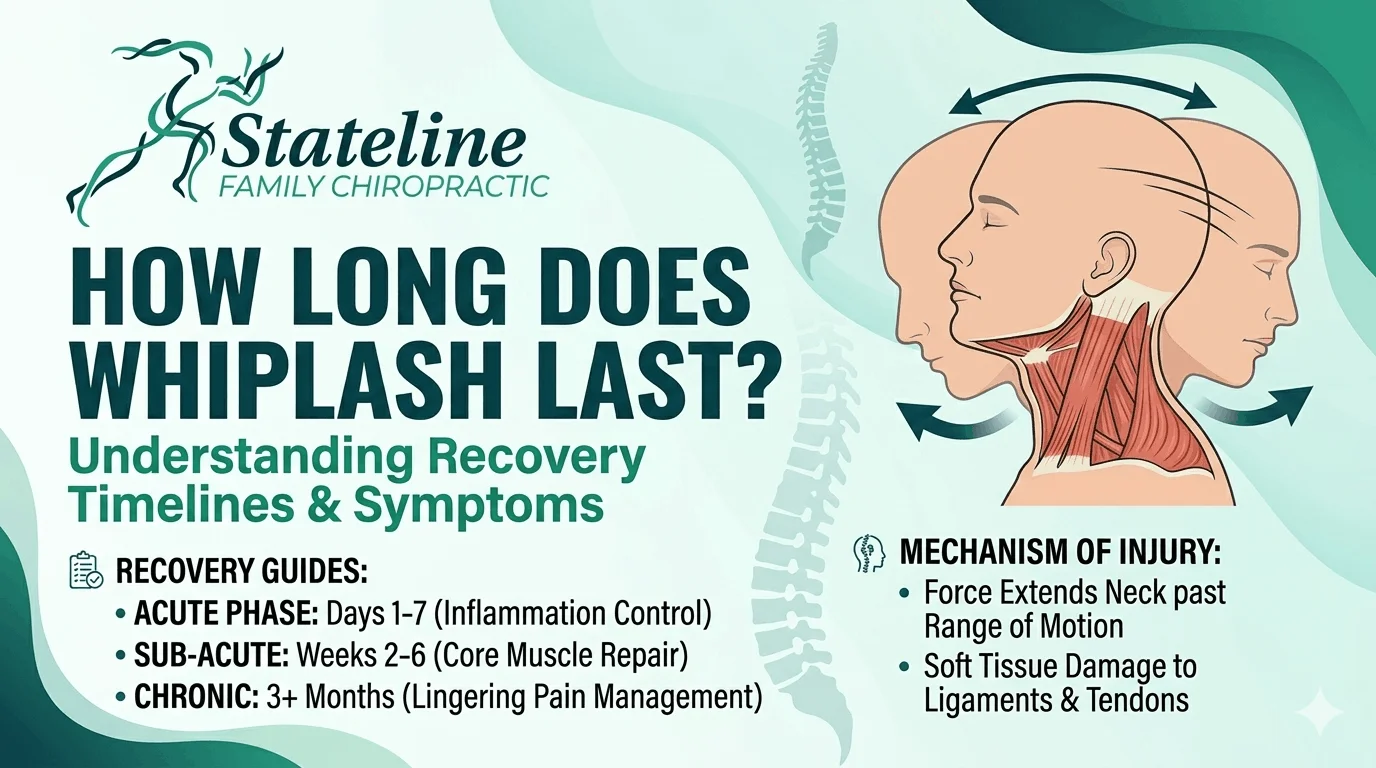
Waking up with a stiff, painful neck after an accident can throw your entire life out of gear. Naturally, the first question on your mind is going to be how long does whiplash last. Simple daily tasks like driving, working at a desk, or even looking down at your phone suddenly become exhausting chores. Soft tissue injuries are notoriously tricky because they do not heal overnight. On top of that, the underlying mental stress from the initial shock can make your physical symptoms feel even worse. That is why having a clear understanding of the recovery timeline can give you peace of mind. Let’s break down what to expect during your recovery journey.
Many people make the mistake of ignoring a neck strain if it feels manageable at first. However, skipping a medical checkup can cause small injuries to turn into chronic problems down the road. Micro-tears in your muscles can easily get worse without the right therapeutic care. Instead of waiting around for the pain to become unbearable, it is always smart to be proactive. Modern physical therapy diagnostics can map out your injury accurately. This way, you can figure out the best way to heal safely.
Understanding the Basics: Whiplash How Long Does It Last?
When you are stuck dealing with a painful neck flare-up, you want real answers about whiplash how long does it last. In very mild scenarios, you might feel back to normal within two to three weeks. On the flip side, deep tissue damage or ligament sprains will require a lot more time to heal. You have to remember that tendons and ligaments do not get a lot of direct blood flow. Because of this limited circulation, cellular repair moves at a frustratingly slow pace. You just have to be incredibly patient with your body during these early weeks.
It is completely normal to wonder how long does a whiplash last when your neck still feels locked up after a month. For the majority of patients, acute pain and swelling begin to fade around the four to six-week mark. Yet, chronic cases can stick around and disrupt your life for several months. In fact, some individuals experience stubborn, lingering aches for over a year. Because everyone heals differently, keeping a daily pain log is incredibly helpful for your chiropractor or physical therapist.
Let’s look at the data regarding how long does whiplash usually last for the average individual. Studies show that roughly seventy percent of patients make a full recovery within three months. Unfortunately, the remaining thirty percent often transition into long-term chronic discomfort. If you notice that your neck stiffness is not improving after a few weeks, do not ignore it. Getting professional medical support early on dramatically improves your chances of a fast, smooth recovery.
Post-Collision Timelines: How Long Does Whiplash Last After Car Accident?
Car crashes are, by far, the most frequent cause of severe cervical spine strain. This makes understanding how long does whiplash last after car accident situations incredibly important for your health and any insurance claims. The intense kinetic energy from a rear-end collision forces your head to snap forward and backward violently. This rapid movement stretches your neck muscles way past their normal, safe range of motion.
Interestingly, even a low-speed fender bender can generate enough force to cause a painful muscle strain. Of course, high-speed impacts do far more damage to your deeper joint capsules and spinal discs. This explains why car accident recovery timelines vary so much from person to person. Even your posture at the exact moment of impact can change how badly you get hurt. Instead of rushing right back to heavy lifting or intense workouts, give your body a few days of pure rest. This simple break gives your inflamed tissues a fighting chance to calm down.
Managing Specific Symptoms: How Long Does Whiplash Headache Last?
Cervicogenic headaches are a uniquely miserable side effect of a neck injury. Because they can completely ruin your focus, patients regularly ask how long does whiplash headache last. These specialized headaches start because of compressed nerves and tight muscles at the base of your skull. The pain then travels up over your head, causing a dull, throbbing ache behind your eyes or temples.
In most typical cases, these trauma-related headaches naturally clear up within two to three weeks. However, if your occipital nerves stay pinched by tight muscles, the headaches can become a daily battle. Chronic headaches can easily linger for months if you do not target the actual root cause of the tension. Instead of just swallowing painkillers every day, consider specialized physical therapy. Gentle manual therapy and targeted stretching can take the pressure off those angry nerves. As the muscle tension melts away, your headache frequency will drop significantly.
Autonomic Disturbance: How Long Does Nausea Last After Whiplash?
Dealing with nausea after a neck injury is incredibly disorienting and uncomfortable. If you are struggling with this, you are probably desperate to know how long does nausea last after whiplash. This wave of sickness usually happens because the upper neck injury disrupts your vestibular system, which controls your balance. In other cases, it can be a subtle warning sign of a mild concussion from the accident.
The good news is that this dizziness and nausea usually clear up within a few days to a week. If the room keeps spinning past that point, you definitely need a full neurological evaluation. A persistent misalignment in your neck joints can keep confusing your inner ear’s balance centers. Instead of trying to push through the vertigo, give yourself permission to rest in a dark, quiet room. Make sure to drink plenty of water to help your nervous system recover from the trauma. The nausea will gradually fade away as the deep inflammation in your neck subsides.
Critical Factors That Delay Your Whiplash Healing Timeline
No two bodies recover at the exact same speed. Several everyday variables can speed up or slow down your body’s natural healing rhythm. Recognizing these factors helps you adjust your daily expectations and recovery plan.
-
Age and Physical Fitness: Younger, active bodies naturally repair tissue damage a bit quicker. Pre-existing issues like spinal arthritis can make the recovery process much more complicated.
-
Past Neck Traumas: If you have injured your neck before, those muscles are already vulnerable. A new impact can trigger a much more intense inflammatory response.
-
Daily Stress Levels: High anxiety causes you to subconsciously tense your shoulders and neck. This constant muscle guarding keeps the area tight and delays healing.
Practical Steps to Accelerate Your Recovery
When it comes to healing a neck strain, movement is often better than staying completely still. Modern sports medicine doctors rarely recommend using stiff neck collars for long periods anymore. Instead, keeping your neck moving gently within a comfortable, pain-free range is much better for your recovery.
Using a mix of ice and heat therapy is a highly effective way to manage localized swelling. Stick to ice packs for the first forty-eight hours to numb sharp pain and control inflammation. After that initial phase, switch to moist heat pads to relax the muscles and boost blood circulation. Working with a physical therapist will introduce safe, gentle stretching routines to restore your flexibility. Finally, paying attention to your posture while sitting at your computer prevents extra strain on your spine. Making these smart daily adjustments will help you get back to your pain-free life much faster.
Frequently Asked Questions
Q: How long does acute whiplash pain generally last?
A: Acute whiplash pain generally lasts four to six weeks.
Q: Can a car accident cause long-term chronic neck pain?
A: Yes, severe vehicle collisions can cause chronic neck pain.
Q: Why does whiplash often cause a severe headache?
A: Damaged neck nerves radiate intense pain up into skull.
Q: How long does nausea typically last after an injury?
A: Nausea typically fades completely away within a few days.
Q: Should you wear a cervical collar for several weeks?
A: No, prolonged immobilization actually delays your natural muscle recovery.